
What Free Building Codes Actually Cost
📰 Two brothers put the building codes online in 2016. A year later the lawsuits started and never stopped. Garrett Reynolds on what it actually costs to keep the law free, and why the hardest part was never the software.
What would your practice look like if quoting two sentences of the building code required someone's written permission?
Summary
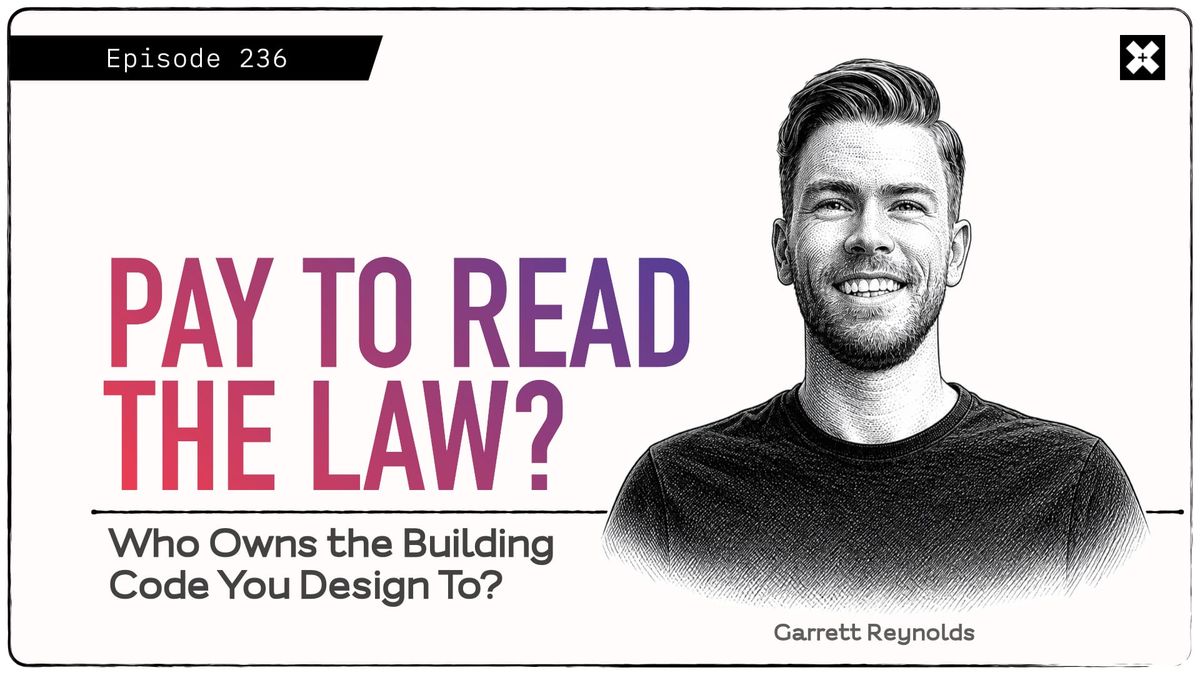
Garrett Reynolds is the co-founder and president of UpCodes, and he came on the show (TRXL 236) to give an update on a fight that has now been running for nearly a decade. His brother Scott, an architect, has told parts of this story here before. This time Garrett handled it, and the update is bigger than I expected.
The short version is that UpCodes put building codes online and made them searchable, and has been sued more or less continuously ever since. The International Code Council (ICC) sued in 2017, then again nine days after losing, then again in 2023. The Facility Guidelines Institute (FGI) sued in 2022. ASTM sued in 2024, including a trademark claim over UpCodes using the letters ASTM on its own website. UpCodes has not lost. No court has ever ordered them to take the law down.
What I didn't fully appreciate before this conversation is that winning in court did not end anything. Having failed with judges, the publishers went to Congress with a bill called the Pro Codes Act, whose full name is Protecting and Enhancing Public Access to the Law, and which would hand them copyright over the law itself. The legal fight and the legislative fight now run in parallel, and Garrett's operating assumption is that both continue forever.
What's Inside
- The three-layer ruling. A federal judge found for UpCodes on three independent grounds, and the reason he stacked them says something about what he expected to happen next.
- Escape velocity. Garrett names the thing UpCodes had to build first, and it wasn't the search engine.
- The American rule. There's a structural feature of US litigation that makes suing a startup a viable business strategy, whether or not you have a case.
- A process meant for post offices. How a contested bill nearly passed the House under a procedure designed for uncontroversial housekeeping.
- Ten letters. The surprisingly small amount of constituent pressure that changed how a congressional office treated this bill.