
The Nuclear Bomb Moment for BIM
📰 Is a "nuclear bomb moment" coming in BIM software as AI empowers small teams to rival legacy companies? Antonio González Viegas from That Open Company discusses how open-source infrastructure and expertise redefine productivity and business management in the AEC industry.
What happens to an industry when the foundational technology its dominant players spent decades building and billions protecting suddenly becomes free?
Summary
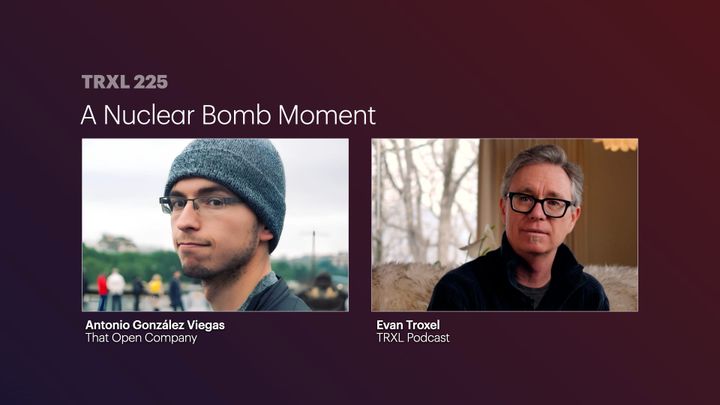
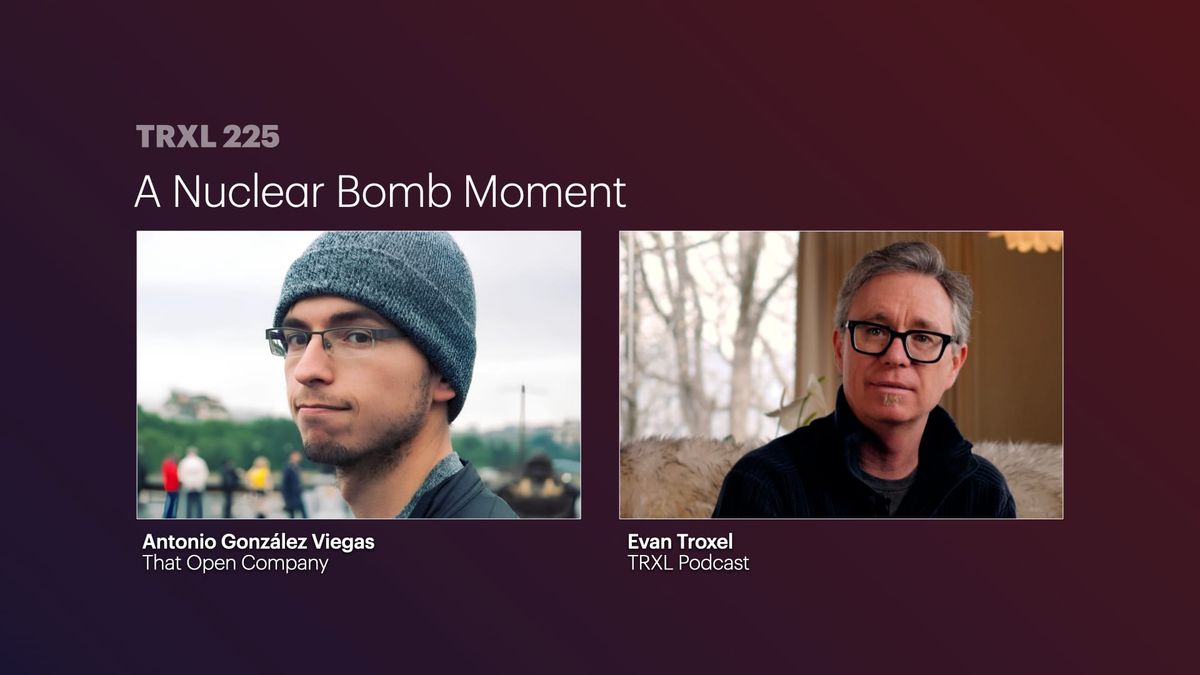
In TRXL episode 225 I sat down with Antonio González Viegas, founder of That Open Company, and it turned into one of the more interesting conversations I've had about where the BIM software market is headed. Antonio trained as an architect in Spain, taught himself to code, built IFC.js as a hobby project, and eventually founded That Open Company to give away for free what every BIM software vendor has been forced to build in private. His tools (geometry engines, IFC parsers, 3D renderers for the browser) are used by over 1,000 companies, including some of the biggest names in tech, all under an MIT license that asks nothing in return.
The business model isn't the code they’ve written. It's the expertise, training, and consulting on top of it. Over ten people, bootstrapped, growing on real revenue. It's a counterintuitive model that Antonio is happy to defend, even though I think he’s leaving a lot of money and value on the table.
But the conversation didn't stay on the business model. It moved quickly to what AI has done to the development math. Antonio described producing 3,000 lines of reviewed, tested code per day with Claude. His team planned four releases this year. Now they're considering eight or more. He called it a "nuclear bomb moment" for incumbent BIM software developers. The technical barriers protecting legacy vendors for decades aren't getting weaker… the tools available to everyone else just got dramatically stronger. And that leads to the harder questions underneath all of it: if developing BIM software is easy, do software devs have the structure in place to support their users? If firms finally have access to better tools, are they actually structured to benefit from them?
What's Inside
- The Reinvention Tax. Why the construction industry has forced every BIM software company to solve the same foundational problems from scratch, and what that has cost the market in competition and price.
- The Video Game Engine for BIM. How one open-source approach is changing who can enter the BIM software market, and what the precedent from gaming tells us about where this is headed.
- The Nuclear Bomb Moment. Why the technical barriers protecting legacy BIM vendors for decades aren't simply eroding, and what that means for the competitive landscape right now, not in five years.
- AI Multiplies What You Already Know. The critical distinction between directing AI with deep domain expertise and deploying it without one, and why that difference will define winners and losers in the next wave of BIM development.
- The Business Management Gap. The sharper question beneath all the technology: whether firms have the foundational clarity to benefit from any of these tools at all.