
230: 'Rooms for Storytelling', with Keith Gerchak
A conversation with Keith Gerchak about designing performing‑arts spaces for storytelling, balancing hand‑drafted craft with technology, and the parallels between theater architecture and independent filmmaking.
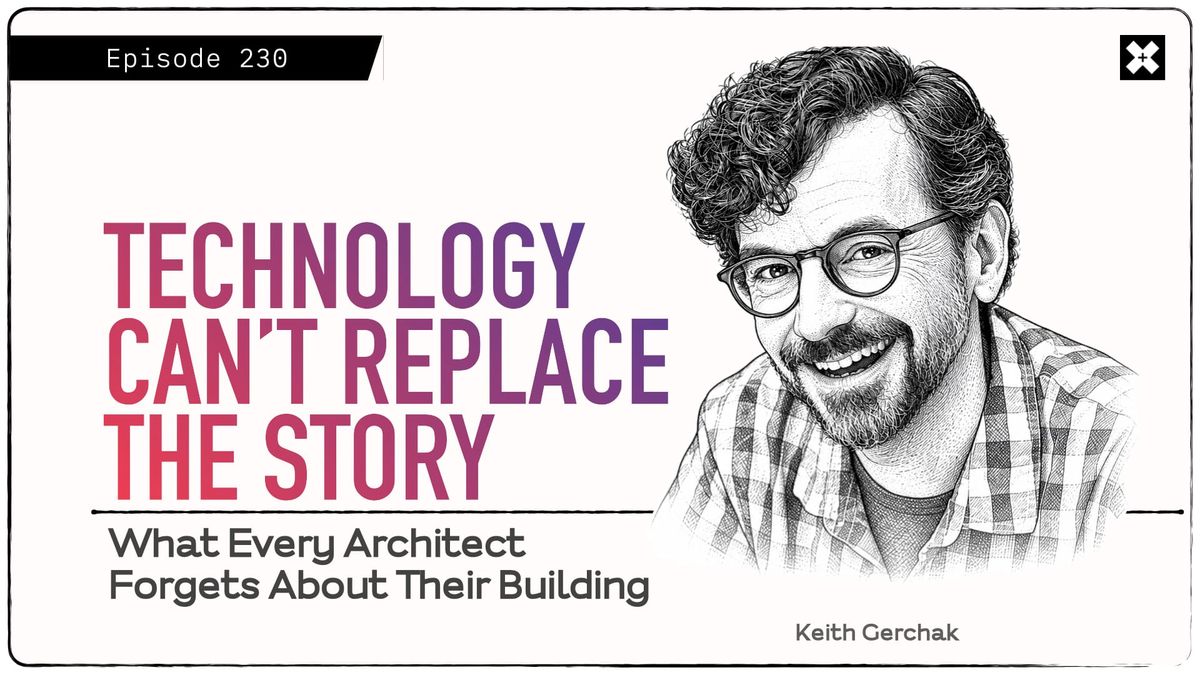
Keith Gerchak joins the podcast to talk about the double life he's been living for thirty years: designing spaces for storytelling as the Design Principal at TheatreDNA, and inhabiting those spaces as an actor and filmmaker. We explore what makes performing arts buildings unlike any other building type, the surprising parallels between directing a feature film and managing an architecture project, and how technology — from Revit to AI — can either serve a story or quietly strip it of meaning.
This episode is especially relevant for architects and design technologists who feel the tension between the tools they use every day and the purpose those tools are meant to serve. Keith makes the case quietly and specifically — drawing from three decades of bespoke theater design and a twelve-year independent film that made it into 500 theaters nationwide — that knowing why a building exists, and for whom, is the one thing no technology gets to replace.
Original episode page: https://trxl.co/230

Watch This Episode on YouTube:
Episode Links:
Some links on this page help fund our work, and we may earn a commission from purchases at no extra cost to you.
Connect with the Guest
- Keith Gerchak, AIA
- TheatreDNA — Keith's theater consulting firm; 30 years of performing arts design.
- Double G Films — the film production company Keith co-founded with Marisa Guterman.
The Film: Lost & Found in Cleveland
- Lost & Found in Cleveland
- IMDB
- Trailer on YouTube
- Instagram — follow for the streaming announcement, expected this holiday season.
- Released in 500 theaters nationwide in fall 2025. Stars Martin Sheen, Dennis Haysbert, June Squibb, Stacy Keach, Jon Lovitz, Loretta Devine, Jeff Hiller, and more.
- Marisa Guterman — co-writer, co-director, co-producer
Designing Rooms for Storytelling
- TheatreDNA
- Website
- Keith's firm specializing in "rooms for storytelling": theaters, concert halls, opera houses, dance studios, amphitheaters, and screening rooms. Collaborates with architects including Gehry Partners and SANAA.
- Theatre Projects
- Website
- The world's oldest continually operating theater consultancy, founded in London in 1957 by Richard Pilbrow. Where Keith began his consulting career.
- Playhouse Square, Cleveland
- Website
- The second largest performing arts center in the US outside New York City. Keith performed here as a child actor and later renovated it as an architect.
Historical & Cultural Context
- William McKinley Presidential Library & Museum
- Website
- The Canton, Ohio museum that became the tonal touchstone for the film — quirky, earnest, full of unexpected exhibits. A visit here led Keith and Marisa to the Wizard of Oz allegory at the center of the story.
- Antiques Roadshow on PBS
- Website
- The long-running PBS series that inspired the film. Around 10 million weekly viewers; gives anyone two minutes to tell their personal history through an object.
- The Hero's Journey
- Wikipedia
- The narrative framework underlying the film: five characters, each lost and finding their way back through the meaning of an object.
- "Citizenship in a Republic" — Teddy Roosevelt's Man in the Arena speech
- Wikipedia
- The 1910 speech Keith quoted near the end: "It is not the critic who counts." Applied to indie filmmakers, performing arts architects, and anyone doing bespoke work against industry consolidation.
Books & Required Reading
- The Fountainhead by Ayn Rand
- Amazon
- Keith's required reading from his first semester at Tulane — which he was alarmed to discover current architecture students have never heard of. Howard Roark's struggle with individual creative vision vs. institutional dilution runs through this entire conversation.
About Keith Gerchak:
Every weekend as a child growing up in Cleveland, KEITH GERCHAK would ride in the back seat of his parents' car to visit his grandmother on the other side of town. Over the Hope Memorial Bridge, passing turn-of-the-century buildings in the city core, Cleveland's architecture inspired – the legacy, the boldness, the majesty. He went on to study acting while earning a Master’s Degree in Architecture at Tulane University and the University of Newcastle-upon-Tyne in the UK, taking to heart the words of Daniel Burnham, architect of The Mall at the center of Cleveland's City Beautiful Group Plan:
Make no little plans; they have no magic to stir men's blood and probably themselves will not be realized.
Returning to Cleveland, Keith served for a decade as studio director of two different architectural firms, renovating the city’s historic Playhouse Square theatres in which he had acted since childhood, and co-founded a small professional theatre there. He subsequently moved to New York City and eventually Los Angeles, where his acting career evolved into co-founding a film production company as his design career focused on theatre design consulting.
Over the last 20 years, Keith has established himself as a prolific and respected designer of spaces for storytelling – theatres, concert halls, opera houses, dance studios, amphitheatres, museums, screening rooms and performing arts centers. For the last 10 years, he has served as Design Principal of TheatreDNA, a theatre consulting firm that works with globally-recognized architects on bespoke projects around the world.
He has also spent the last 12 years co-directing, writing and producing with Marisa Guterman the feature film LOST & FOUND IN CLEVELAND, a look at the post-Industrial American Dream in the Industrial Midwest – a slice of life depiction over a 24-hour period that follows the personal odysseys of five very different people, whose lives intertwine when America’s favorite televised antiques appraisal show comes to Cleveland. It’s “Best in Show” meets “The Wizard of Oz.”