
181: ‘Densities of Information’, with Matt Jezyk
A conversation with Matt Jezyk about exploring the evolution of design collaboration tools, embracing real-time feedback for enhanced architectural workflows, and addressing the challenges of integrating new technologies in the AEC industry for better outcomes.
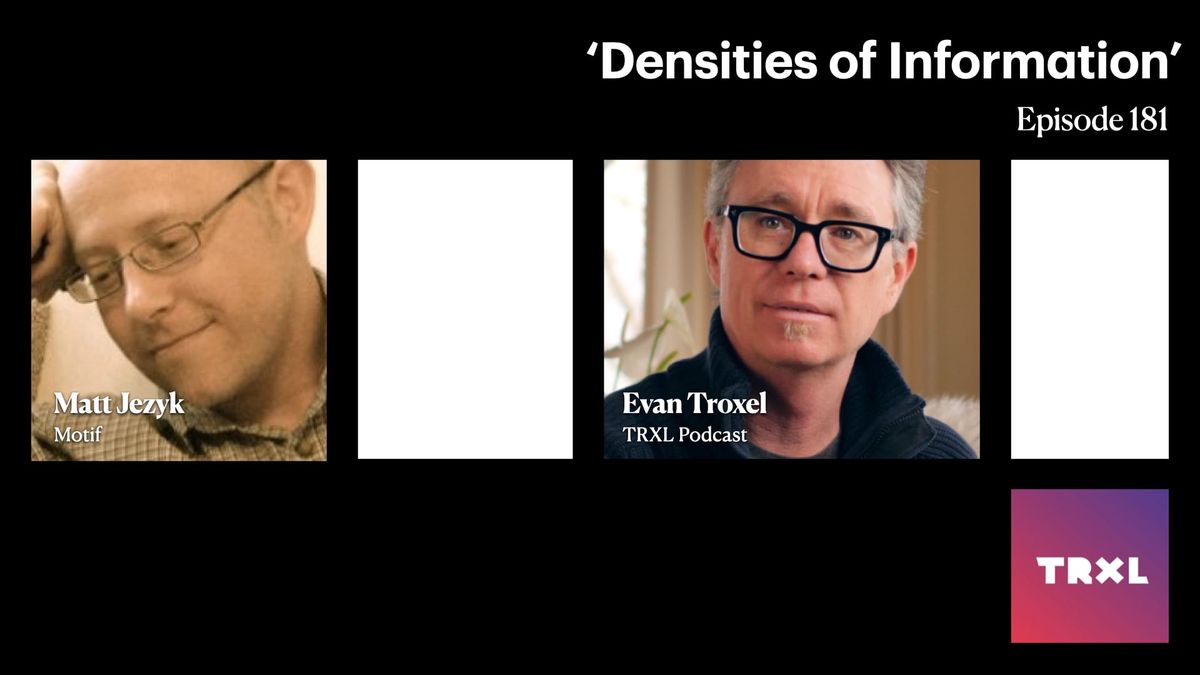
Matt Jezyk joins the podcast to talk about his journey from architecture to software development and his pioneering work with platforms like Autodesk Revit, Dynamo, and now Motif. We discuss the evolution of design collaboration tools, the impact of new technologies on the architectural design process, and how embracing real-time collaboration and cloud-based systems can revolutionize the AEC industry. Key discussion points include the challenges of modern software design, the advantages of integrating multiple platforms, and the future of AI and machine learning in AEC design.
Watch this episode on YouTube:
Episode links:
Connect with the Guest
Tools and Emerging Technologies
- Motif
- Motif Official Website
- The collaborative design platform discussed in this episode, focusing on modern workflows, real-time feedback, and dense information continuity.
- Dynamo for Revit
- Autodesk Dynamo Page
- Parametric and visual scripting tool co-created by past podcast guest Ian Keough—key to computational workflows that Matt Jezyk helped bring to life.
Visualization & Design Tools
- Figma for Architects
- Figma Official Website
- The web-based collaborative design tool cited as inspiration for Motif’s approach to real-time, multiplayer design environments.
- Miro – Collaborative Whiteboarding Tool
- Miro Official Site
- Frequently used during the pandemic for remote architectural collaboration—worth exploring as a stepping stone to more integrated collaboration platforms like Motif that feature an “infinite canvas”.
- Bluebeam Revu
- Bluebeam Revu
- Still widely used for PDF-based markup workflows in AEC; understanding its limitations helps illuminate the “data loss” problem Motif aims to solve.
Modular Construction and Innovation in Building
- Factory OS
- Factory OS Website
- A leading U.S.-based modular construction company tackling housing affordability through prefab innovation.
- Katerra (post-mortem)
- Belinda Carr: The Rise and Fall of a $2 Billion Construction Prefab Startup | Katerra
- A sobering case study in VC-funded AEC disruption, referenced by Matt in the discussion.
- WeWork’s Construction Playbook
- Construction Dive: Q&A: How WeWork's construction team is using tech to scale up
- A deep dive into how WeWork achieved industrialized construction at scale, echoing themes of repeatability and process optimization.
Psychology and Personal Development
- Daniel Kahneman’s Thinking, Fast and Slow
- Amazon Link
- Useful when considering how we make design decisions under pressure and with incomplete information—core to Motif’s mission.
- Julie Dirksen’s Design for How People Learn
- Amazon Link
- A guide to designing user-centered tools and platforms—very applicable to user interface thinking in AEC software development.
Recommended TRXL Podcast Episodes
For further exploration of topics related to collaboration, design technology, automation, AEC innovation, and the evolving role of architects in the digital age, consider these episodes:
- Episode 180: ‘The Dynamo Story’
- Ian Keough tells the origin story of Dynamo and takes us on a journey through its evolution from a simple idea to becoming an essential tool in computational design.
- Episode 179: 'Analyzing AEC'
- Matt Wash and Konrad Sobon discuss digital transformation, enhancing productivity through data insights, and understanding a company's digital footprint.
- Episode 163: 'Confusing Evolution With Innovation', with Nirva Fereshetian
- Nirva Fereshetian explores the complexities of implementing digital practice in architecture firms.
- Episode 168: 'The Challenges of Under-Digitization in AEC'
- César Flores Rodríguez addresses challenges and opportunities in digitizing AEC.
- Episode 158: 'AEC is an Adhocracy'
- Andy Robert and Mercedes Carriquiry discuss leadership and change management in AEC.
- Episode 165: 'Transitioning to Leading People in AEC Tech'
- Phil Read and Adam Thomas share insights on transitioning to leadership roles in AEC tech.
- Episode 177: 'The Digital Futures of Architectural Practice'
- Kristen Forward discusses the impact of emerging technologies like AI and machine learning on architectural practice.
- Episode 137: 'Accelerating Tech in AEC'
- German Aparicio Jr. talks about AI, machine learning, and innovation in AEC.
About Matt Jezyk:
Matt Jezyk spent over two decades at Autodesk, contributing significantly to the development of Revit Architecture and Revit Structure. He also led the team responsible for Dynamo, a computational design tool widely adopted in the architecture, engineering, and construction (AEC) industry.
Matt was most recently at Tesla, where he developed software to streamline the design, fabrication, and construction processes for the company's Gigafactories.
Throughout his career, Matt has been instrumental in integrating computational and generative design with digital fabrication tools and robotics, presenting his work at conferences such as ACADIA, SmartGeometry, and Robots in Architecture.
Matt holds a Bachelor of Architecture from Carnegie Mellon University with Minor in Business, Concentration in Computer Science.