
Define Your Value Before Someone Else Does
📰 In this edition, explore how AI might reclaim architecture’s purpose by capturing process over paperwork, redefining value before owners dictate it, and building tools that empower every skill level.
What if the drudgery slowly hollowing out the architecture profession isn't an unavoidable industry condition, but the predictable result of tools that were never designed to make buildings better?
Summary
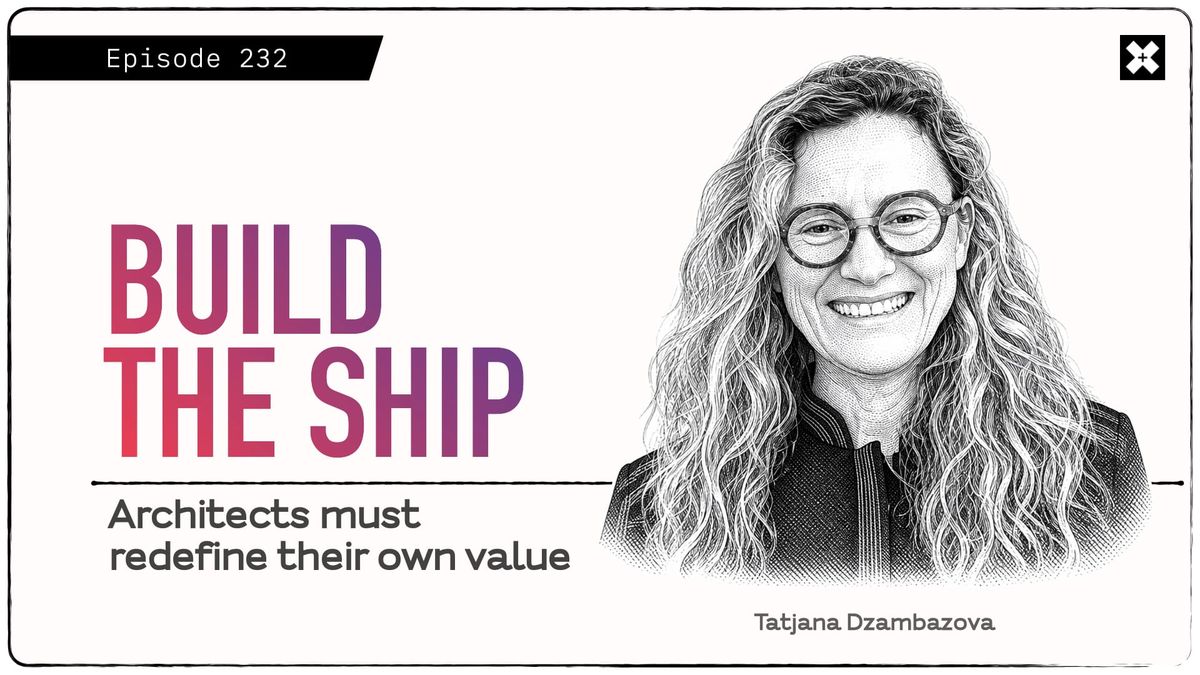
In TRXL 232, I sat down with Tatjana Dzambazova, who leads AI strategy at Motif and has spent the better part of three decades at the intersection of architecture, technology, and the design of design tools. Tatjana was Autodesk's first product manager for Revit, co-wrote the first three books on it, helped turn Autodesk from a design company into a “design-and-make” company, and was involved in everything from photogrammetry to the early AI lab. She has one of those careers that sounds like several lives lived in parallel.
Her current project is Motif, a startup founded by a group of former Autodesk colleagues, including Amar Hanspal, Brian Matthews, and Matt Jezyk, who are building what they believe the AEC industry actually needs: a new tool built from the ground up for the age of AI. Not AI bolted onto 25-year-old architecture. A clean start.
What made this conversation unusual was the honesty. Tatjana is simultaneously one of the most optimistic people I've spoken with about what AI can do for architects, and one of the most worried about what it might do to us if we get the framing wrong. That tension runs through the whole conversation and, I think, gets at something the industry isn't spending nearly enough time on.
What's Inside
- The Terror of Technological Expertise. Why the history of AEC tools created a pattern of experts and everyone else, and whether AI is the first real chance to break it.
- What Revit Never Built. How the most successful tool in architectural history was optimized for one outcome while the outcomes that matter most went unaddressed.
- Hoarding Artifacts vs. Capturing Process. The gap between what firms store and what actually makes their architecture distinctive, and what disappears when senior architects leave.
- Faster Is Not Better. Tatjana's warning about the cognitive risk of optimizing away the thinking that defines architectural expertise.
- The Five AI Deities. A framework for understanding what AI actually does, organized around five capabilities that together define a new kind of design partner.