
If AEC knowledge lives in people’s heads, you don’t have a system
📰 What if AI isn’t the problem, but the mirror? This edition explores how fragile knowledge systems really are, why hero experts create risk, and how AI can accelerate learning without replacing human judgment.
What would break in your firm tomorrow if the one person everyone depends on didn’t show up… and would you even know it until it was too late?
Summary
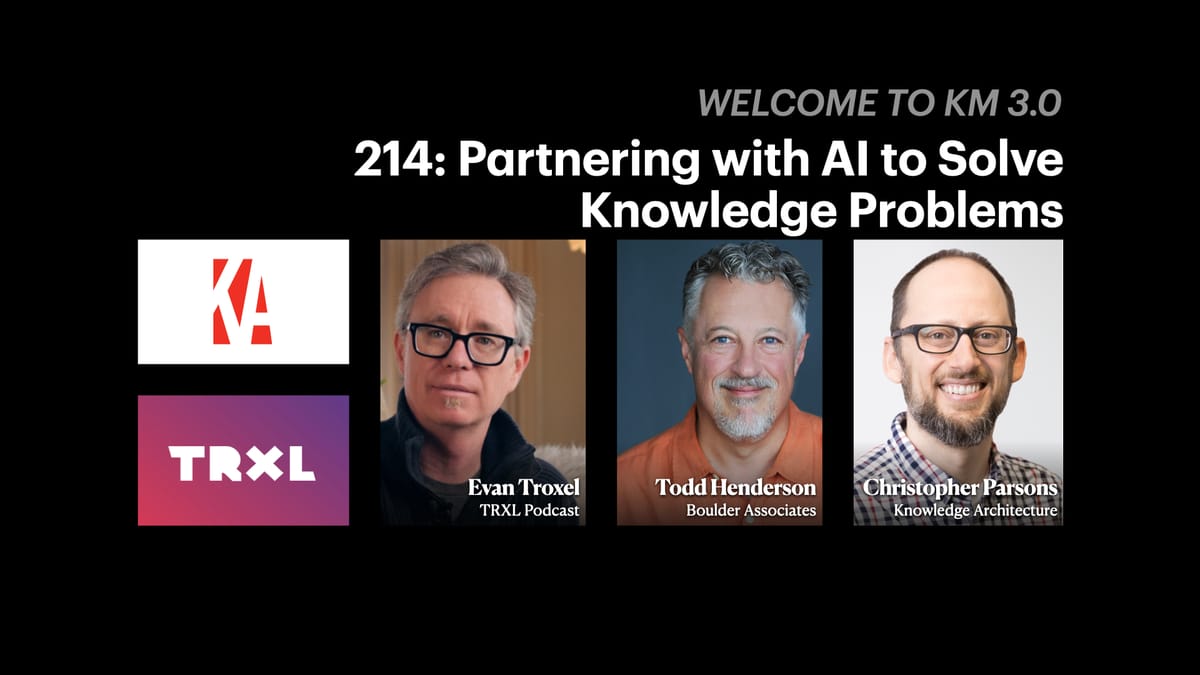
In TRXL episode 213 I talked with Todd Henderson and by Christopher Parsons about what it actually looks like to partner with AI when the real challenge is not the tool but the fragility of institutional knowledge inside expert organizations.
Todd walked through a case at Boulder Associates where a medical planning accelerator emerged from a painfully common reality: critical expertise lived in people’s heads, scarce experts became bottlenecks, and teams were expected to get up to speed faster than the organization could teach them.
The sequence Todd followed is what made it click for me. He didn’t start by interrogating the rockstar expert. In Todd’s words, he “went to gemba,” learning the real workflow from the people closest to the work, and treated that as both a fact finding mission and an act of respect. That mindset, combined with AI as a bandwidth and recall amplifier, created a repeatable way to solve knowledge problems without turning knowledge management into a documentation death march.
Architects already live in the exhausting reality of documentation—producing drawings, specs, and endless coordination sets under relentless deadlines. The last thing they want is another layer of documentation work, this time aimed inward at their own processes and knowledge. It feels like being asked to draw the drawing of how you draw.
So what do you do when faced with the same conundrum in your organization? This is the code that Todd has cracked.
Key Takeaways
Here are my top takeaways from the podcast episode. Then we'll get into the deeper analysis.
- AI as capacity, not replacement: Todd framed AI as superhuman bandwidth, attention, and recall that accelerates execution after human judgment sets direction.
- Start with the work, not the expert: Going to gemba was not symbolic, it was a deliberate sequencing choice to understand reality and build trust.